
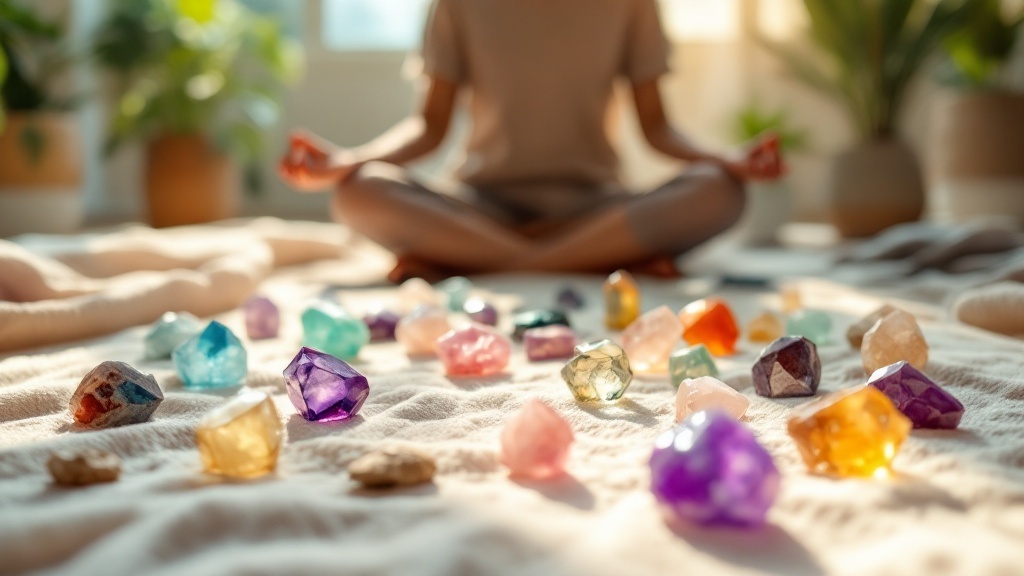
What Everybody Ought To Know About Healing Gemstones
Welcome to a journey few dare to take—into the hidden world of gemstones, where myth, history, and healing converge in ways most people never stop to question. This is not a story designed for jewelry counters or fashion magazines. It is a record of belief, power, and continuity stretching back thousands of years.
Where Earth, History, and Belief Converge
Across civilizations, gemstones were never mere decoration. People carried them into battle, sealed them into tombs, carved them into amulets, and placed them on the bodies of the sick and dying. Long before modern medicine, humanity turned to the earth itself for protection, balance, and healing.
What follows is a ranked journey through the Top 10 Healing Gemstones with Mysterious Powers—stones whose reputations survived empires, religions, and scientific revolutions. And while modern science may hesitate to confirm their effects, one question remains unavoidable:
Why did so many cultures, separated by oceans and centuries, believe in the same stones?
#10 — Carnelian: The Stone of Vitality
Sacral Chakra
The second energy center in the body, located in the lower abdomen, associated with the color orange, the element water, and themes of pleasure, creativity, emotions, sensuality, and healthy relationships, governing our ability to feel, flow, and express desire. A balanced sacral chakra fosters joy, creativity, and emotional fluidity, while imbalances can manifest as emotional blocks, creative stagnation, or issues with intimacy and pleasure. Balancing involves activities like spending time near water, dancing, or visualization to promote healthy expression and flow.
If I told you that ancient civilizations once believed a fiery red orange stone could restore courage, heal the body, and even protect the soul in the afterlife, would you be curious enough to hold it in your hands? That stone is Carnelian, ranked number 10 on our list of healing gemstones with mysterious powers. And its story is far older and far stranger than you might expect.
Look and feel
Geologically, Carnelian is a variety of chalcedony that forms when silica-rich solutions crystallize within volcanic and sedimentary rocks. Its primary sources stretch across India, Brazil, and Egypt, and the Nile Valley holds some of the oldest known deposits. Archaeologists excavating sites in Mesopotamia and the Indus Valley have uncovered carnelian beads dating back over 4,000 years, clear evidence of its enduring role in trade and ritual.
Visually, Carnelian is unmistakable. Its colors range from soft orange to deep blood red, sometimes displaying subtle banding or a cloudy translucence. When artisans polish the stone, it glows as if a fiery core burns from within. The gem appears in many forms, from smooth cabochons set in rings and pendants to hand-carved seals and amulets that rulers and priests once carried. In ancient Egypt, people placed carnelian scarab amulets in tombs, believing they would grant vitality to the deceased in the afterlife.
But what about its healing powers?
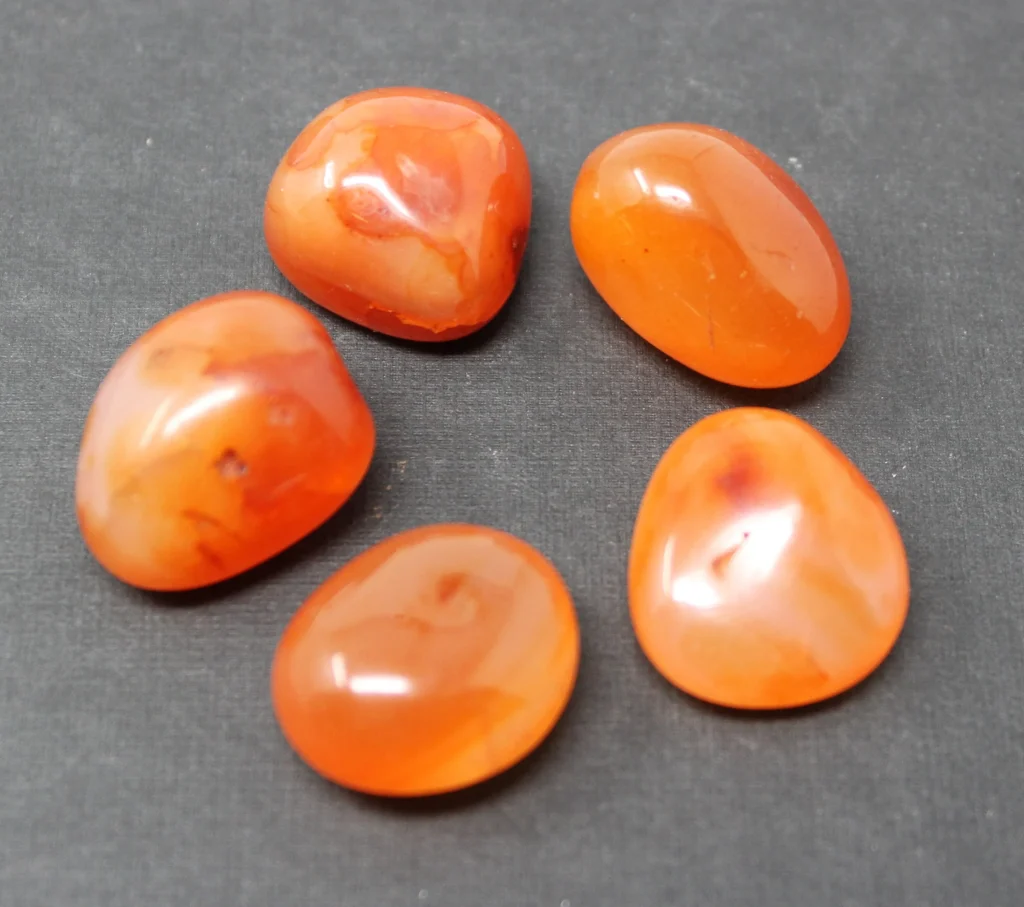
Across cultures, people linked Carnelian energy, vitality and physical strength. The Babylonians wore it as a talisman to calm anger. In Islamic tradition, people believed Carnelian rings protected the faithful in both body and spirit. Even in medieval Europe, physicians prescribed Carnelian as a remedy for fever and to stop bleeding. In modern metaphysical practice, practitioners call Carnelian the stone of vitality. They associate it with the sacral chakra and believe it to enhance motivation, creativity and reproductive health. Some energy practitioners use it to balance emotional states, dispelling fear and increasing confidence.
Physical attributes of the Carnelian stone
- Stimulates blood flow
- Eases lower back pain
- Restores courage to the weaker fearful
While science does not confirm these effects, the persistence of these beliefs across millennia speaks volumes about Carnelian’s cultural power.
Ranked number 10, Carnelian is more than a glowing red stone. It is a bridge between geology and belief, a reminder that for much of human history, health and strength were sought not only in medicine, but in the mysterious powers hidden within the earth.
#9 — Lapis Lazuli: The Stone of Truth
Third eye chakra
The sixth primary chakra located in the center of the forehead, between the eyebrows, governing intuition, imagination, wisdom, and spiritual insight, acting as a gateway to higher consciousness and inner knowing beyond physical sight, linked to the pineal gland and often represented by the color indigo and the element of light. Balancing this energy center helps in trusting inner guidance, seeing truth, and achieving clarity and purpose by connecting the inner and outer worlds, while imbalances can lead to illusions or lack of insight.
If someone handed you a deep blue stone flecked with gold, a gem that once decorated the eyes of pharaohs and the thrones of Mesopotamian kings, would you see it as mere ornament or as a doorway to wisdom and healing? This is the story of Lapis Lazuli, ranked number nine on our list of healing gemstones with mysterious powers.
Look and feel
Geologically, Lapis Lazuli is not a single mineral but a rock composed primarily of lazurite, calcite, and pyrite. Its most renowned deposits lie in Badakhshan, Afghanistan, where miners have extracted the stone for over 6,000 years. Smaller sources occur in Chile and Russia, yet Afghan lapis has long set the standard for quality. Its intense royal blue coloration, accented by golden flecks of pyrite, remains unmatched.
Visually, Lapis Lazuli commands attention. When craftsmen polish it into beads or cabochons, the stone reveals a velvety depth of blue, often traced with shimmering pyrite streaks. Ancient artisans shaped lapis into amulets, seals, and decorative inlays for masks and statues. In Egypt, people ground lapis into pigment for cosmetics, while Renaissance artists transformed it into ultramarine—the most prized blue in painting—used by masters such as Michelangelo.
Beyond its visual appeal, lapis lazuli also carried a long-standing reputation for healing.
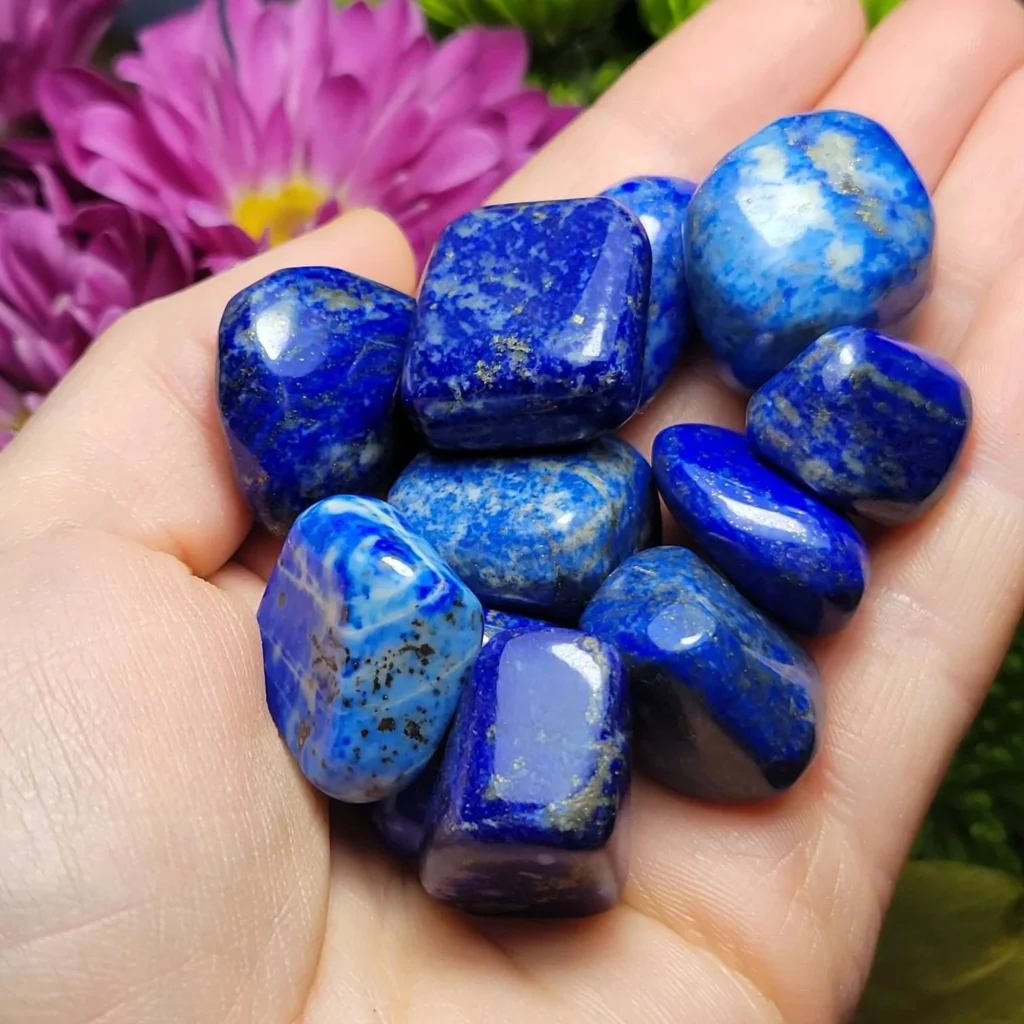
Ancient physicians in Mesopotamia prescribed powdered Lapis to calm the mind, reduce fever, and purify the spirit. In Egypt, people considered it the stone of the gods and placed in tombs to guide the dead into the afterlife. Buddhist traditions later adopted it as a gem of inner peace and enlightenment, said to heal emotional wounds and open the path to wisdom. In modern metaphysical practice, practitioners call Lapis Lazuli the stone of truth. They associate it with the throat chakra and believed to help with communication, self expression, and honesty.
Physical attributes of the Lapis Lazuli stone
- Strengthens the immune system
- Soothes inflammation
- Aids in overcoming depression or insomnia
While these effects remain symbolic rather than scientific, the persistence of such beliefs across continents and centuries underscores the stone’s cultural power. Think of it like this, for more than 5,000 years, rulers, priests and healers turned to Lapis not only to adorn their bodies but to protect their souls. Could all of them have been wrong? Or did they understand something we have forgotten?
Ranked number nine, Lapis Lazuli is more than just a blue stone. It is a timeless emblem of truth, wisdom, and healing, carried from the mountains of Afghanistan in into the hearts of civilizations across history.
#8 — Amethyst: The Stone of Peace
Crown chakra
The seventh primary energy center, located at the top of the head, symbolizing spiritual connection, enlightenment, and universal consciousness, often visualized as a violet or white lotus of a thousand petals connecting us to the divine and higher wisdom. When balanced, it brings clarity, purpose, and unity, while imbalances can lead to isolation, lack of direction, or spiritual distress.
What if a single purple stone pulled from the earth could calm your mind, help you sleep, and was once believed to keep emperors sober at their banquets? Would you call it myth or proof of a power we still don’t fully understand? That stone is amethyst, ranked number eight on our list of healing gemstones with mysterious powers.
Look and feel
Geologically, Amethyst is the violet variety of quartz, deriving its color from trace amounts of iron and exposure to natural radiation within the Earth. Deposits occur worldwide, ranging from the massive geodes of Brazil and Uruguay to fine crystals found in Zambia, Sri Lanka, and Siberia. South America also hosts the largest cathedral geodes, some towering over two meters high, forming dramatic caverns lined with shimmering purple crystals.
Visually, Amethyst leaves a lasting impression. Its hues range from pale lavender to deep royal purple, occasionally displaying flashes of red or blue under specific lighting conditions. Gem cutters commonly facet amethyst for rings and pendants, while artisans also polish it into spheres, carve it into talismans, or preserve it as natural crystal clusters displayed in homes and temples. For centuries, its distinctive color has associated amethyst with royalty, yet its reputation extends far beyond aesthetic appeal.
Yet its significance endures not merely in its physical beauty, but in the cultural, symbolic, and spiritual meanings it has carried through the ages.
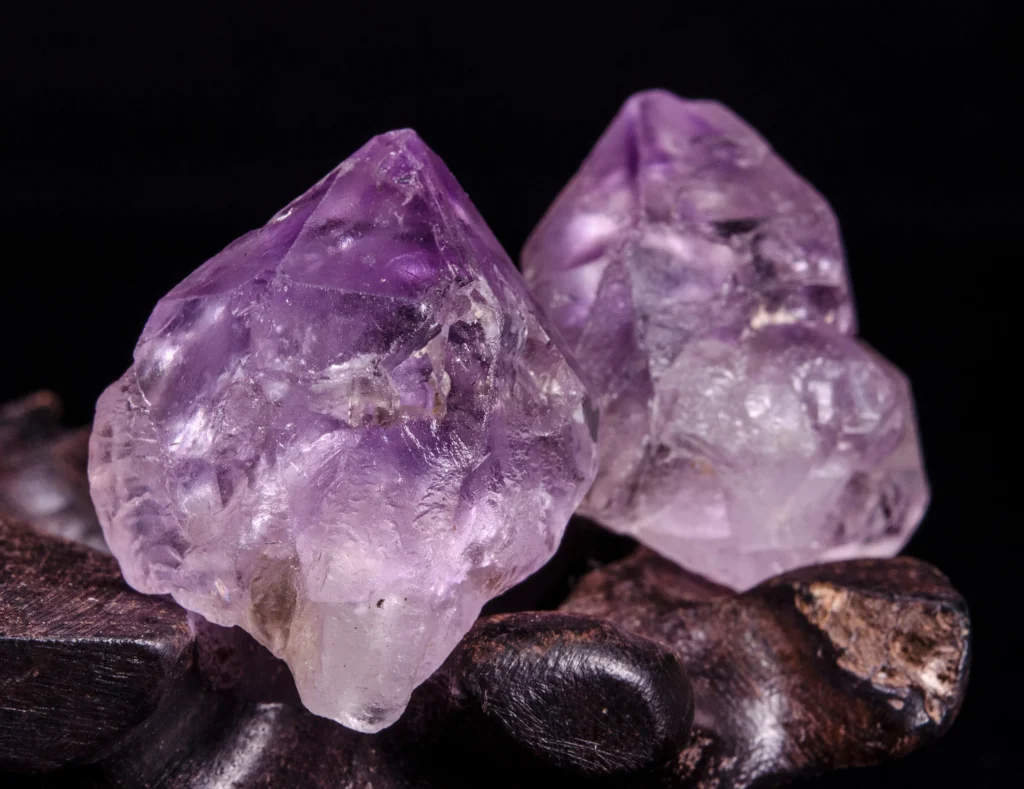
In ancient Greece, people called it amethystos, meaning not intoxicated. They carved drinking vessels from this stone, as they believed it could prevent drunkenness and preserve mental clarity. Medieval Europeans believed that amethyst could calm anger, sharpen the intellect, and protect soldiers in battle. In Tibet, Buddhist monks used it in prayer beads, believing the stone enhanced meditation and spiritual connection. In modern metaphysical practice, practitioners know Amethyst as the stone of Peace. Archaeological findings support this legacy. From Egyptian tombs to Roman jewelry, amethyst has appeared wherever people sought both luxury and protection. Its durability, combined with its mystical associations made it a natural choice for crowns, bishops, rings, and sacred objects across cultures.
Physical attributes of the Amethyst stone
- Eases headaches and soothe anxiety
- Encourages restful sleep
- Reduces stress
- Promotes serenity
While scientists have not proven these effects, the global persistence of these beliefs demonstrates how deeply amethyst resonates with human ideas of healing and balance.
Ranked number eight, Amethyst is more than a violet crystal. It is a bridge between the earth’s chemistry and humanity’s search for peace, a stone that has soothed minds, guided prayers, and adorned the powerful from antiquity to the present day.
#7 — Turquoise: The Stone of Protection
throat chakra
The fifth energy center in the body, located at the throat, governing communication, self-expression, truth, and creativity, acting as a bridge between your inner world and outward expression. Associated with the color blue and the element of ether (space), a balanced throat chakra promotes clear speech, listening, and authenticity, while imbalances can manifest as difficulty speaking, fear, or throat/neck issues.
If a single stone could shield you from danger, heal your body, and connect you to the spirits of your ancestors, would you dare to wear it every day? That is the story of turquoise, ranked number seven on our list of healing gemstones with mysterious powers.
Look and feel
Turquoise forms in arid, copper-rich regions where groundwater interacts with surrounding minerals over thousands of years. Its most renowned deposits occur in ancient Persia—modern-day Iran—as well as in the deserts of Egypt, the American Southwest, and Tibet. From these harsh landscapes emerged a gemstone whose blue-green hues captured the imagination of countless civilizations.
Visually, Turquoise is instantly recognizable. Its coloration ranges from sky blue to greenish blue, often veined with dark matrix patterns that resemble rivers or spider webs. When artisans polish turquoise into cabochons or carve it into beads, the stone reveals a soft, opaque luster that sets it apart from transparent gemstones. In ancient Egypt, Turquoise adorned necklaces, scarabs, and the funerary mask of Tutankhamun. In the American Southwest, Native tribes such as the Navajo and Zuni inlaid turquoise into silver jewelry, creating designs that remain iconic today.
Beyond its decorative use, Turquoise also served as a symbol of protection.
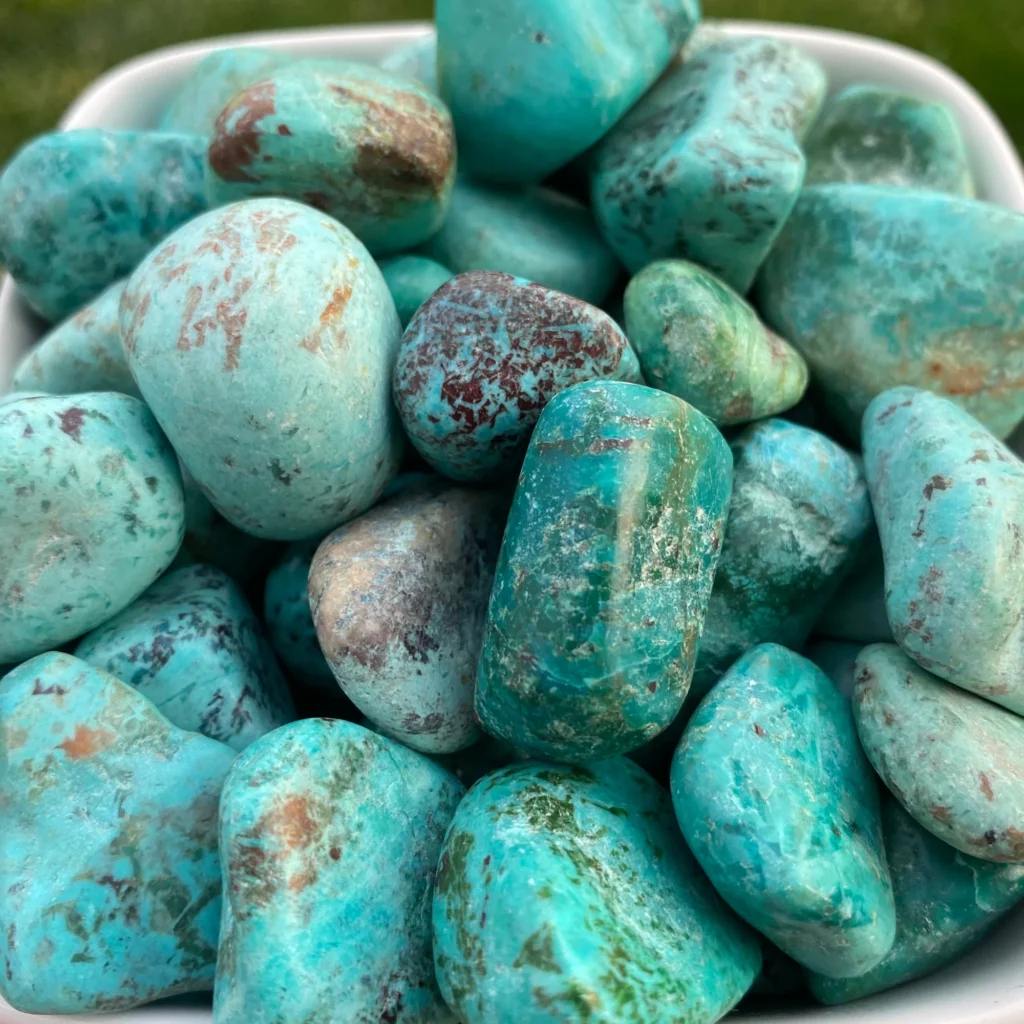
Ancient Persians believed it safeguarded riders from falls and changed color to warn of danger. Egyptians considered it a stone of rebirth, granting health and vitality in this world and the next. In Mesoamerica, the Aztecs crafted Turquoise mosaics for ceremonial masks, seeing the stone as a vessel of divine power. Among Native Americans, people gave Turquoise to warriors and hunters, believed to heal wounds, strengthen the body, and ward off evil spirits. In modern metaphysical practice, they refer to Turquoise as the stone of protection. Archaeologically, its significance is undeniable. Excavations in Mesopotamia, Egypt, and the American Southwest consistently reveal Turquoise artifacts, proving its role as both currency and sacred objects. It was never just a gem it was a bridge between earth and sky, between the physical and the spiritual.
Physical attributes of the Turquoise stone
- Balances emotions
- Supports the respiratory system
- Enhances communication
- Worn as a talisman to ward off accidents or illness
While science does not confirm these effects, the enduring nature of these beliefs over thousands of years makes Turquoise one of the most culturally significant gems in history.
Ranked number seven, turquoise is more than a gem it is a shield, a healer, and a cultural constant across civilizations. A stone of protection whose mysterious powers continue to resonate in 2026.
#6 — Jade: The Stone of Harmony
heart chakra
The fourth energy center in yogic tradition, located in the chest, representing love, compassion, empathy, and connection, acting as a bridge between lower (physical) and upper (spiritual) chakras, and is associated with the color green and the element of air; imbalances can lead to jealousy or emotional detachment, while balance fosters deep connection and joy.
Suppose people called one gemstone the heartbeat of civilizations, prized not for rarity alone but for its power to protect, heal, and even grant immortality. Would you see it as decoration or destiny? That stone is Jade, ranked number six on our list of healing gemstones with mysterious powers.
Look and feel
Geologically, Jade consists of two distinct minerals: nephrite and jadeite. Nephrite occurs primarily in China, Siberia, and New Zealand, while jadeite originates mainly from Myanmar. Both minerals possess exceptional toughness, exceeding that of most gemstones, which allows artisans to carve them into highly intricate forms. Throughout history, jade has served not only as a gemstone but also as a sculptural medium.
Visually, Jade displays a broad spectrum of colors. The most iconic variety, emerald-green jadeite, often appears translucent and seems to glow from within. Nephrite commonly occurs in creamy white, pale green, or deep spinach green tones. Craftsmen have shaped jade into bangles, amulets, ritual axes, and burial suits, and its smooth polish and dense texture give it an unmistakable presence.
Yet Jade’s significance has always extended beyond its physical qualities.
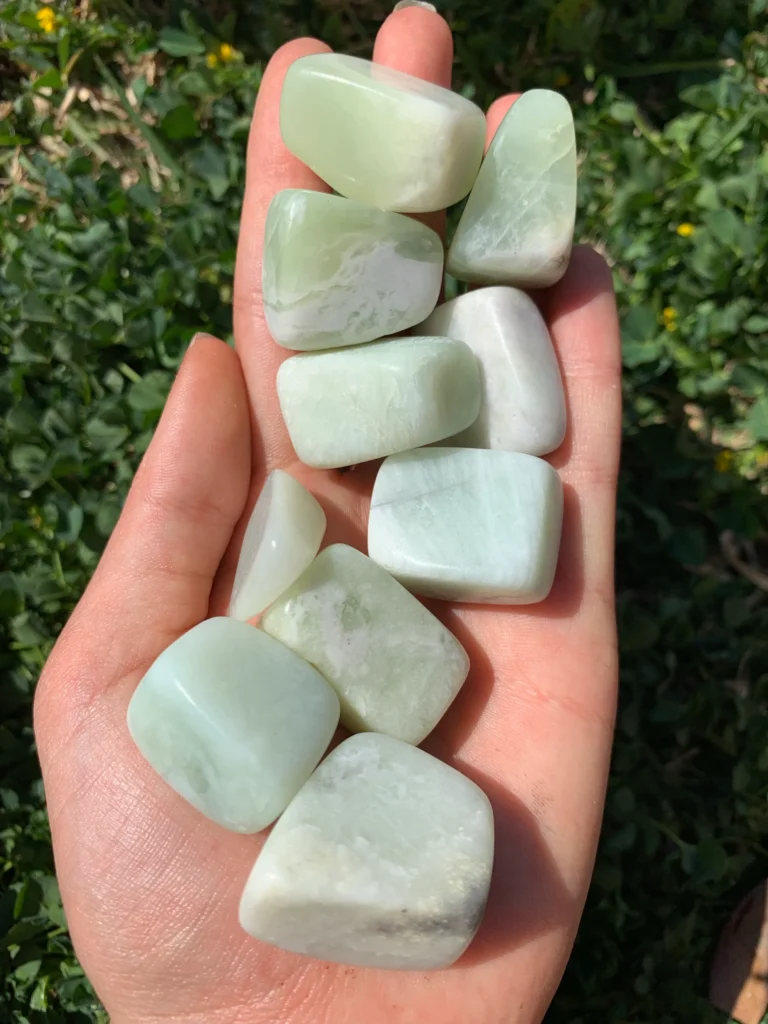
In ancient China, people revered Jade as the Stone of Heaven. Confucius wrote that Jade embodied the virtues of wisdom, courage, and compassion. People believed it to protect the body and life and preserve the soul in death. Hence the discovery of Jade burial suits in Han dynasty tombs. The Maya and Aztec considered Jade more valuable than gold, used in offerings to the gods and worn by rulers to symbolize eternal life. Among the Maori of New Zealand, jewelry makers carved nephrite Jade, or punamu, into pendants called hetiki. The ancestral protectors believed it to hold spiritual mana. Modern metaphysical practice refers to Jade as the stone of harmony. It is associated with the heart chakra, said to calm the mind, attract prosperity, and support physical healing.
Physical attributes of the jade stone
- Strengthens the kidneys
- Soothes the nervous system
- Balances internal energy
Jade rollers, still popular today, trace their roots back to practices where the stone was placed on the skin to reduce inflammation and restore vitality. While science does not verify these effects, Jade’s enduring place in medicine, ritual, and art across continents underscores its profound symbolic role in human history.
Ranked number six, jade is far more than a gemstone. It is a bridge across cultures and centuries, a stone of harmony that has shaped civilizations and continues to embody humanity’s search for balance and healing.
#5 — Rose Quartz: The Stone of Love
heart chakra
The fourth energy center in yogic tradition, located in the chest, representing love, compassion, empathy, and connection, acting as a bridge between lower (physical) and upper (spiritual) chakras, and is associated with the color green and the element of air; imbalances can lead to jealousy or emotional detachment, while balance fosters deep connection and joy.
If there were a gemstone said to mend a broken heart, open the path to forgiveness, and invite love into your life, would you keep it close to your chest? That is the story of rose quartz, ranked number five on our list of healing gemstones with mysterious powers.
Look and feel
Geologically, Rose Quartz is a variety of macrocrystalline quartz that derives its soft pink coloration from trace amounts of titanium, iron, or manganese. Deposits occur widely, with major sources in Brazil, Madagascar, South Africa, India, and the United States. Madagascar yields some of the finest specimens, where crystals display a delicate, almost milky translucence.
Visually, Rose Quartz presents a gentle yet compelling appearance. Its coloration ranges from pale blush to rich pink, often showing a cloudy or silky texture rather than clear transparency. Artisans frequently carve rose quartz into cabochon beads or heart-shaped pendants, using its smooth polish to emphasize its calming character. Sculptors also shape larger blocks into statues or crystal spheres, objects that invite touch and contemplation.
Yet Rose Quartz owes its lasting prominence less to geology than to symbolism.
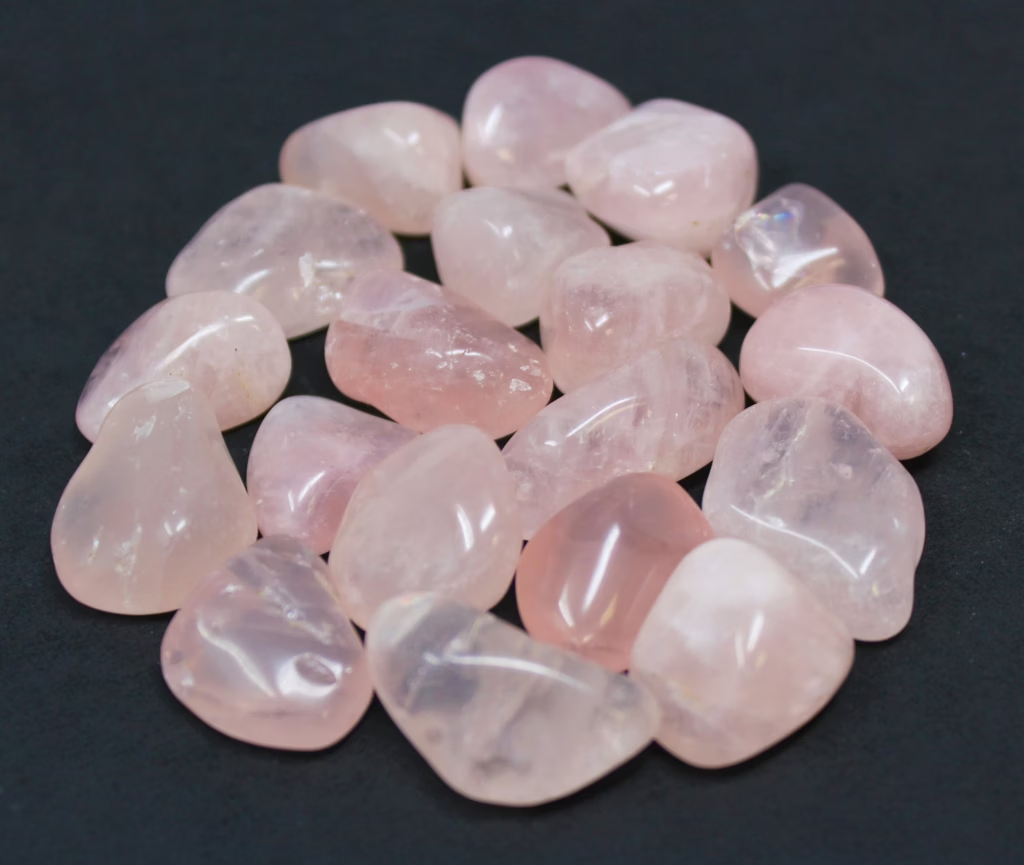
In ancient Mesopotamia and Egypt, the stone was used in rituals of love and reconciliation. Archaeologists have found rose quartz amulets buried with the dead, intended to bring peace in the afterlife. Roman legends tell of Venus, goddess of love, blessing rose quartz with the power to restore harmony between lovers. In medieval Europe, it was a common talisman for couples seeking fidelity and trust. Healing traditions describe rose quartz as the stone of love. It is believed to open the heart chakra, encouraging compassion, self love, and emotional healing. Practitioners claim that it soothes grief, eases loneliness, and promotes forgiveness, qualities essential not only for romantic relationships but also for self healing. Some modern therapists even keep rose quartz in their offices as a symbolic reminder of empathy and care.
Physical attributes of the rose quartz stone
- Supports heart health and circulatory balance
Although these effects remain largely symbolic rather than scientifically proven. What matters is the continuity of its role as a comfort stone across thousands of years. From an archaeological perspective, rose quartz embodies humanity’s need to channel the intangible through the tangible. Civilizations have always sought objects that could represent love, protection, and healing, and rose quartz, with its gentle hue and tactile smoothness, has been that vessel.
Ranked number five Rose quartz is not just a pink mineral. It is the universal stone of love. Ancient, enduring, and still whispering promises of healing to those who keep it close.
#4 — Obsidian: The Stone of Protection and Release
Root Chakra
The first energy center at the base of the spine, symbolizing our fundamental connection to the Earth, security, survival, and physical needs like food and shelter, with its color being red and associated element being earth. A balanced root chakra brings feelings of stability, grounded-ness, and confidence, while an imbalance can manifest as anxiety, insecurity, or issues with health, impacting physical and emotional well-being.
What if the sharpest weapon of ancient empires was also believed to be the sharpest healer of the soul? Would you dare to hold a stone born of fire, a stone that reflects both violence and protection? That is the paradox of obsidian, ranked number four on our list of healing gemstones with mysterious powers.
Look and feel
Geologically, Obsidian is not a crystal but a volcanic glass that forms when molten lava cools so rapidly that crystallization cannot occur. Deposits appear in volcanic regions around the world, including Mexico, Guatemala, Armenia, Iceland, and Japan. Archaeologists have uncovered obsidian blades, arrowheads, and ritual objects at sites ranging from the ancient Near East to the Americas, underscoring its widespread use across cultures.
Visually, Obsidian commands attention. While it most commonly appears jet black, it can also display iridescent sheens or golden, rainbow, and snowflake patterns created by mineral inclusions. When artisans polish obsidian into mirrors, the stone reveals a depth of reflective darkness so intense that many ancient cultures believed it could open portals to other realms.
Yet its significance endures not merely in its physical beauty, but in the cultural, symbolic, and spiritual meanings it has carried through the ages.
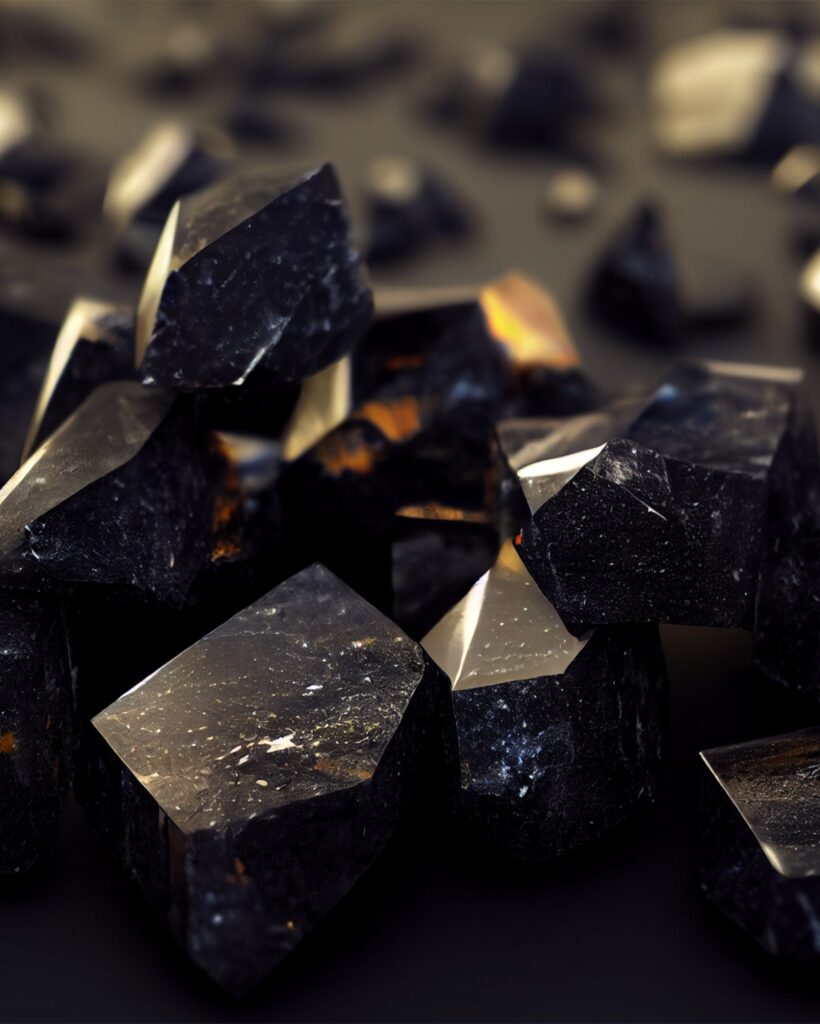
In Aztec and Mayan cultures, obsidian was carved into ceremonial knives used in sacrifices, as well as into protective amulets meant to shield the bearer from harm. Its powers were not only martial. Obsidian was thought to absorb negative energies and reveal hidden truths. Shamans in Meso-America used polished obsidian mirrors for divination, gazing into their depths to contact spirits. In European folklore, obsidian was believed to ward off curses and nightmares. Across cultures, this volcanic glass was associated with protection, protecting warriors on the battlefield, shielding households from malevolent forces, and safeguarding the soul from internal turmoil. In modern metaphysical practice, obsidian is known as the stone of protection and release. Practitioners use it to mirror the self, exposing hidden fears or traumas so they can be released. Snowflake obsidian, with its gray white inclusions, is often used to calm the mind, while rainbow obsidian is associated with emotional resilience.
Physical attributes of the obsidian stone
- Grounds energy
- Cuts through illusions
- Brings repressed emotions to the surface for healing and release
From an archaeological perspective, obsidian reflects humanity’s dual relationship with nature. Destructive and healing, violent and protective. The same material that armed soldiers also comforted priests. The same stone that spelt blood was used to ward off sickness. This duality explains why obsidian continues to fascinate collectors, healers, and spiritual seekers today.
Ranked number four, Obsidian is more than volcanic glass. It is a healer and a weapon. A mirror and a shield, A gemstone of contradictions whose mysterious powers have protected and challenged humanity for millennia.
#3 — Moonstone: The Stone of Intuition
Multi chakral stone
Primarily connects to the crown chakra for spiritual growth and higher consciousness, but also works with the third eye for intuition, and the sacral chakra to balance emotions, creativity, and new beginnings, with different colors (like peach) often highlighting specific lower chakras for emotional clarity, while white/clear varieties focus on the spiritual crown. It cleanses negativity from all chakras, offering spiritual nourishment and balance to mind, body, and spirit.
What if a single gemstone could hold the glow of the moon, shifting and dancing as though light itself were alive inside it? Would you wear it as an ornament or trust it as a guide for your intuition? That is the story of moonstone, ranked number three on our list of healing gemstones with mysterious powers.
Look and feel
Geologically, Moonstone is a variety of feldspar, most commonly orthoclase and albite. As light scatters within its layered internal structure, it produces an optical phenomenon known as adularescence—a shimmering glow that appears to drift across the stone’s surface. Deposits occur in India, Sri Lanka, Myanmar, and Madagascar, with the finest blue-sheen specimens historically sourced from Sri Lanka.
Visually, Moonstone appears ethereal. Its coloration ranges from milky white to translucent gray, often displaying flashes of blue, silver, or subtle rainbow hues as the stone moves in the light. When gem cutters polish Moonstone into cabochons, the stone reveals its luminous sheen at its fullest. Ancient cultures carved moonstone into amulets and rings, while modern jewelers continue to set it into pendants and earrings designed to capture light with every movement.
Yet Moonstone’s significance extends beyond its visual appeal.
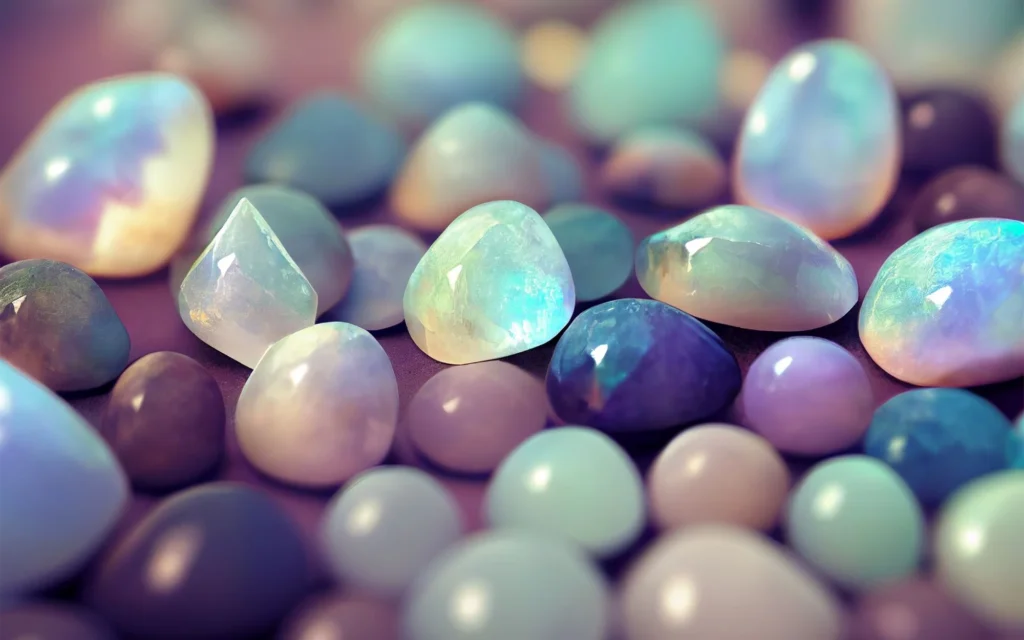
In ancient India, the moonstone was considered sacred to the goddess Chandra, believed to bring blessings of fertility, protection, and spiritual insight. Roman legends claimed it was formed from solidified moonlight. In medieval Europe, travelers carried moonstone as a talisman for safe journeys at night. Across cultures, it has become a symbol of intuition, dreams, and cycles. Healing traditions describe moonstone as the stone of intuition. It is associated with the crown and third eye chakras, said to heighten psychic awareness and stabilize emotions and support hormonal balance. Archaeological evidence supports the symbolic role of moonstone beads. Amulets and carved talismans have been unearthed from sites spanning from India to the Roman Empire, providing proof of their global significance as protective and spiritual gems. Even today in Sri Lanka and India, moonstone remains a popular wedding gift, believed to bring harmony and balance to relationships.
Physical attributes of the moon-stone
- Alleviate stress
- Promotes restful sleep
- Fosters inner clarity
- Placed under a pillow to enhance dreams
- Kept on the body to align with lunar rhythms
While modern science does not validate these claims, the persistence of such beliefs demonstrates its enduring cultural power.
Ranked number three Moonstone is not just feldspar with a glow. It is a cultural constant, a gemstone of intuition, dreams, and light that continues to inspire belief in its mysterious powers across centuries and civilizations.
#2 — Malachite: The Stone of Transformation
Heart chakra
.The fourth energy center in yogic tradition, located in the chest, representing love, compassion, empathy, and connection, acting as a bridge between lower (physical) and upper (spiritual) chakras, and is associated with the color green and the element of air; imbalances can lead to jealousy or emotional detachment, while balance fosters deep connection and joy.
What if the stone you wore for beauty was also believed to absorb poison, ward off evil, and reveal hidden illness? Would you still call it decoration or a healer in disguise? That is the legacy of malachite ranked number two on our list of healing gemstones with mysterious powers.
Look and feel
Geologically, Malachite is a copper carbonate hydroxide mineral that forms in the oxidized zones of copper deposits. Its most notable sources today include the Democratic Republic of Congo, Russia’s Ural Mountains, Zambia and Namibia. For thousands of years, people have mined malachite not only for its ornamental value, but also as a source of copper.
Visually, Malachite is unmistakable. It features rich green tones banded with concentric rings or flowing stripes, patterns that appear almost hand painted. Polished into cabochons, beads, or carved into statues and vessels, malachite reveals swirling designs that fascinated both artisans and priests. In ancient Egypt, malachite was ground into green pigment for cosmetics and used to decorate temples. It was also shaped into protective amulets and placed in tombs, a guardian for the soul’s journey.
But malachite’s reputation extended far beyond its beauty.
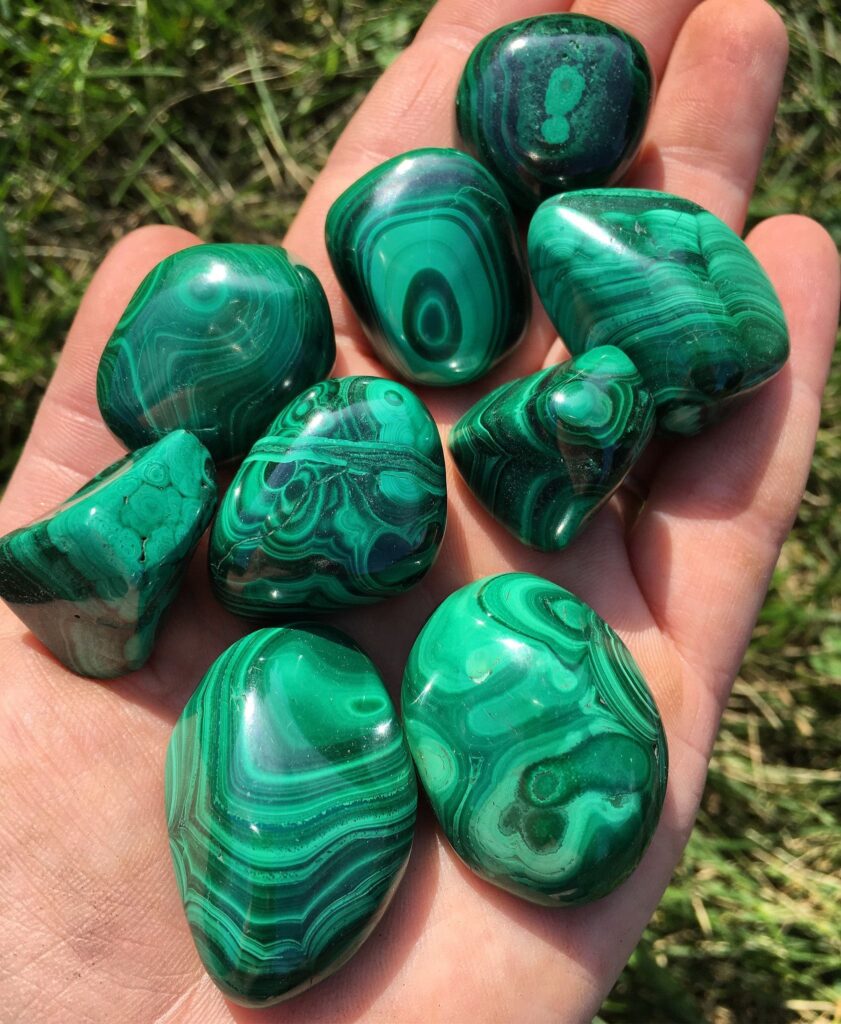
Egyptians and Greeks believed it had the power to absorb toxins and protect against disease. Physicians prescribed a powdered form of malachite mixed with honey to treat infections. In the Middle Ages, malachite was sewn into children’s clothing to ward off nightmares and protect against the evil eye. In Russia, legend said that malachite could grant a vision of the future to those of pure heart. As a healing stone, malachite is associated with transformation and protection. It was said to draw out negative energies and emotional pain, replacing them with clarity and renewal. Some traditions claim that malachite would actually break or crack if the wearer were in danger, sacrificing itself to shield them. Its strong association with the heart chakra makes it a stone of emotional healing and courage, guiding individual through change and growth. From an archaeological standpoint, malachite demonstrates humanity’s long fascination with stones that mirror life itself. Its green hues were linked to fertility, vegetation, and renewal themes, central to both survival and spirituality.
Physical attributes of the malachite stone
- Supports respiratory health (asthma, bronchitis) by clearing congestion
- Alleviates pain (headaches, cramps, arthritis)
- Detoxifies the liver and kidneys
The fact that malachite deposits often appear alongside copper also tied it directly to the rise of metallurgy, making it both a spiritual and technological cornerstone of early civilizations.
Ranked number two, Malachite is the stone of transformation. Green bands of the earth forged into a healer, protector, and symbol of change, carried from the temples of Egypt to the altars of modern crystal healers.
#1 — Clear Quartz: The Master Healer
Master Healer
Primarily linked to the crown chakra at the top of the head serving as a spiritual antenna for higher consciousness, clarity, and divine connection, but its “Master Healer” properties mean it also harmonizes and amplifies energy for all seven chakras, balancing the entire system. It’s used to clear blockages, boost mental focus, and facilitate spiritual growth by resonating with pure white light, making it a versatile tool for overall energetic well-being.
What if there was one gemstone believed to heal all wounds, balance every energy, and amplify the powers of every other stone beside it? Would you call it superstition or recognize it as humanity’s oldest healer? That is the story of clear quartz, ranked number one on our List of Healing Gemstones with Mysterious Powers.
Look and feel
Geologically, Quartz is the most abundant mineral on Earth’s crust, composed of silicon dioxide. However, the clear variety, often referred to as rock crystal, has always held a special place in human imagination. Significant deposits are found in Brazil, Madagascar, the Alps, and Arkansas in the United States. Due to its transparency and size, clear quartz has been utilized since prehistoric times for tools, ornaments, and ritual objects.
Visually, Clear Quartz can be perfectly transparent, like glass or milky, with inclusions sometimes forming large crystal clusters that tower like cathedrals carved into spheres, wands, or leftist natural points. Its brilliance comes not from color but from clarity. Ancient cultures believed this clarity represented purity and connection to the divine.
Its reputation as a healer is nearly universal.
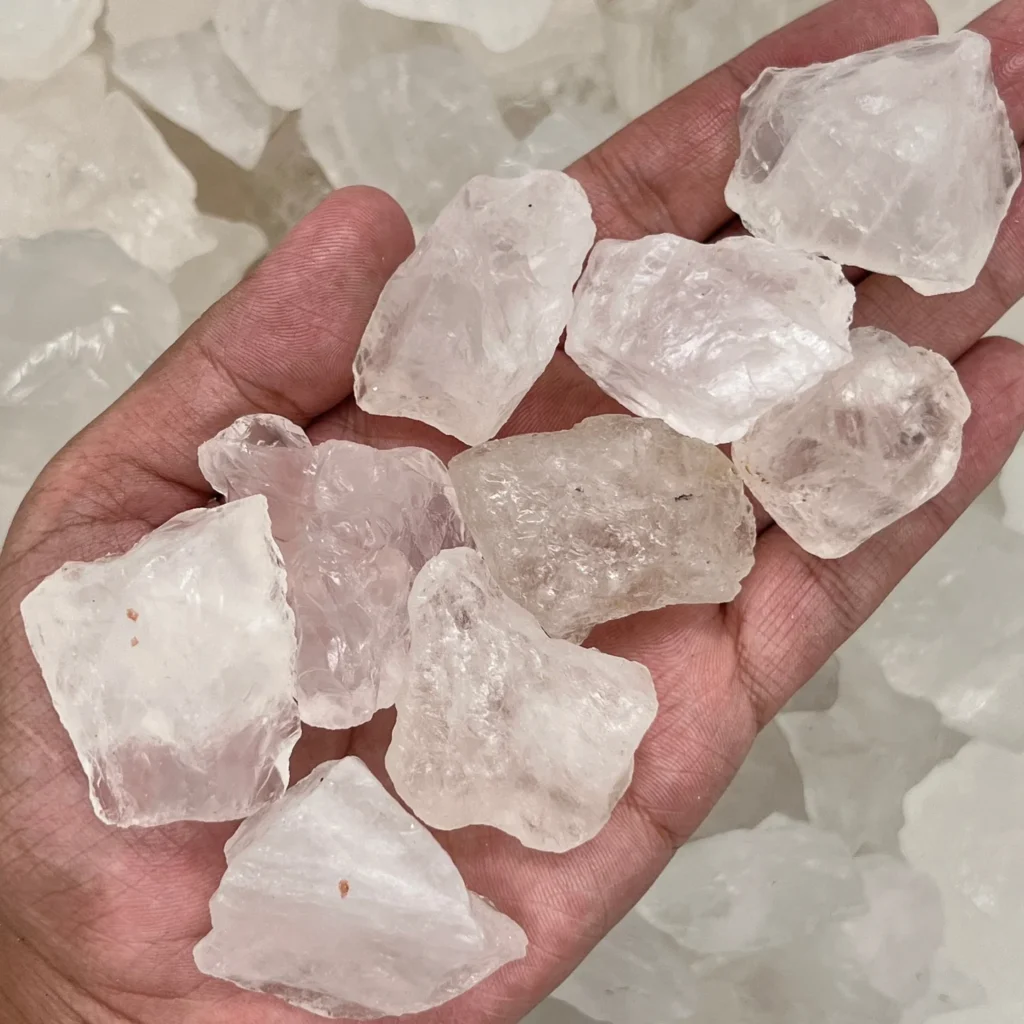
The Greeks believed quartz was ice frozen for eternity, capable of cooling fevers. In Japan, it was seen as a symbol of perfection and enlightenment. Indigenous peoples of the Americas used quartz crystals in ceremonies to channel visions and connect with spirits. Across Europe, healers carried quartz amulets to ward off disease and banish negative energies. Clear quartz is recognized today as the master healer due to its significance in metaphysical traditions. Archaeology reinforces this perception. From the carved crystal skulls of Mesoamerica to neolithic burial sites in Europe, clear quartz has been consistently present in humanity’s sacred spaces. Its durability ensured it survived where softer materials decayed, leaving a trail of belief in its power that spans continents and eras. But its greatest mystery lies in continuity.
Physical attributes of the Clear Quartz stone
- Amplifies energy
- Balances the body’s chakras
- Enhances the properties of other stones
- Supports concentration
- Boosts the immune system
- Promotes emotional stability
Crystal healers often use quartz points in grids or meditation circles, seeing it as a universal tool adaptable to any purpose. While malachite, jade, or lapis were tied to specific cultures, clear quartz appears to be ubiquitous. Regardless of the region or faith, every civilization recognized something extraordinary in this transparent mineral.
Ranked number one, clear quartz is more than just silicon dioxide. It is humanity’s master healer, the stone of clarity, amplification, and endurance that has carried our hopes for healing from the first rituals of prehistory to the crystal altars of today.
Final Reflection
Gemstones are not just stones. They are stories—carried through rituals, buried with kings, worn by healers, and rediscovered by modern seekers.
This journey does not end here. Across remote landscapes, sacred sites, and forgotten ruins, gemstones still wait—legends hidden in plain sight.
And this… is only one stop on a much larger path.